Gold's resistance to corrosion, tarnish and rust has lent it an aura of eternal life. Its sturdiness, and seemingly everlasting sparkle, make it a prominent choice for enchanting precious jewelry as well as decoration.
Besides attractive applications, gold has useful usages as well, specifically in electronic devices applications. Regrettably, as a result of its high demand as well as an unstable economic situation, the price of gold is high, as well as frequently changing, making strong gold an impractical choice for a lot of applications. To resolve this problem, numerous consumers turn to gold plating, to get the benefits of strong gold, without its drawbacks and cost.
It's one of the most usual steels utilized for both ornamental and functional electroplating applications. Various varieties of plating, as well as various plating processes, can be used, depending on the wanted result and planned use.
To make jewelry, an object made from copper, zinc, silver, or one more base metal is usually electroplated with a microns-thick layer of gold plating. Silver, unfortunately, will certainly hemorrhage right into the gold on a molecular degree, over months and also years, leading to tarnishing, as well as change of the initial shade.
Nickel is commonly utilized as a barrier layer between the silver as well as gold to avoid this phenomenon, as well as also since it includes deepness and warmth to the reflectivity.
Since strong gold is costly and soft, layering another metal with gold is a prominent option to boost the longevity, as well as lower the rate, of gold jewelry.
Gold-filled, rolled gold or rolled gold plate is another sort of plating frequently utilized in jewelry-making, which is slightly various from routine gold plating.
The difference is that the gold plating is adhered to the base steel, usually brass, with warm and also stress, causing higher resistance to put on as well as flaking. The plating for these products is normally 17-25,000 times as thick as typical gold plating, making it very sturdy; gold-filled products can last anywhere between five as well as thirty years, depending on the density of the preliminary gold layer.
Common substratum steels for practical gold electroplating include silver, copper, brass, light weight aluminum as well as other alloys - actually, almost any type of metal, and the one that is made use of will certainly depend upon the residential properties that are wanted in the finished item. Unlike ornamental gold plating, gold plating services which differs in pureness, the gold made use of for functional applications need to be as pure as possible, to ensure the best conductivity as well as deterioration resistance.
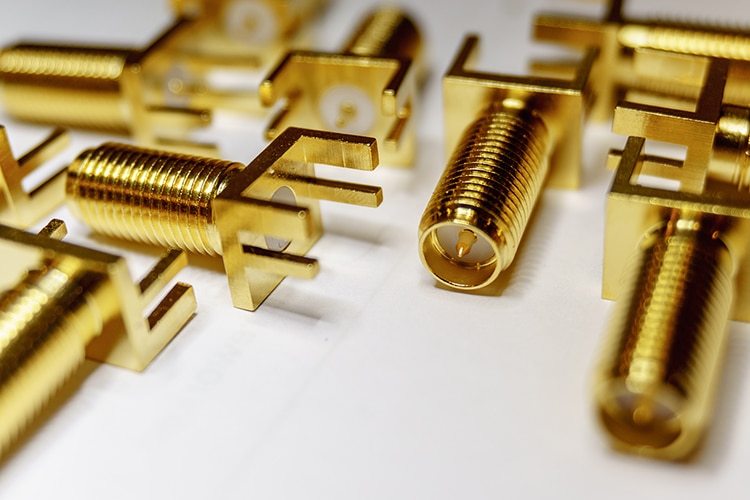
An obstacle layer of nickel is still made use of for functional electroplating, not for visual purposes but due to the fact that it includes surface hardness, and avoids migration. The color of practical gold plating is usually comparable to that of 24-carat ornamental plating. Circuit card, stereos and radio connectors are simply several of the several applications for functional gold plating.
Due to its high demand and also an unsteady economic climate, the price of gold is high, as well as constantly varying, making solid gold a not practical choice for the majority of applications. To resolve this issue, many consumers transform to gold plating, to get the advantages of solid gold, without its disadvantages and also rate tag.
The color of practical gold plating is typically comparable to that of 24-carat decorative plating. Circuit boards, audio systems and also radio ports are just some of the several applications for useful gold plating.